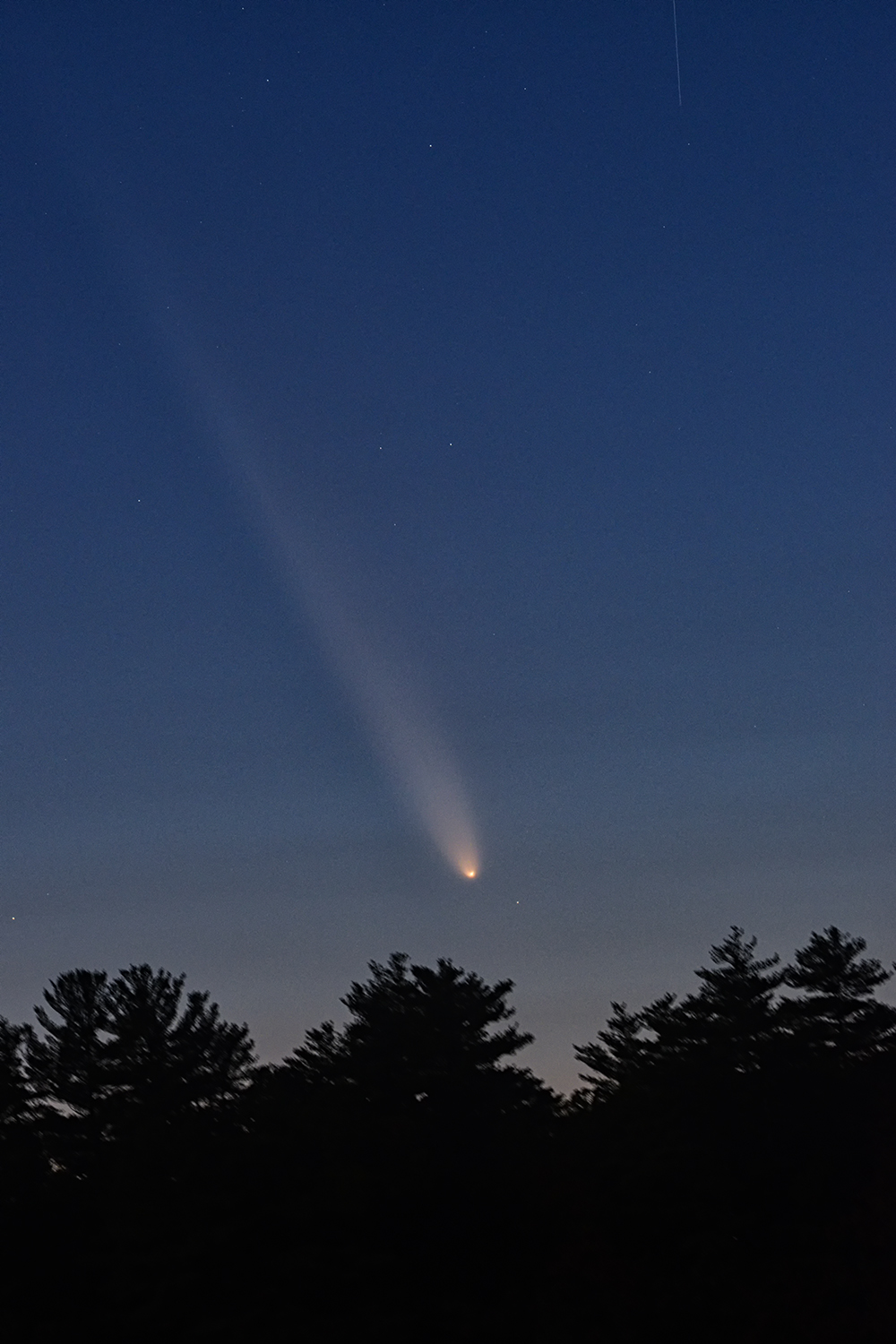
Comet Tsuchinshan-ATLAS 2023A3: October 2024
This comet was discovered by the Purple Mountain Observatory in China on January 9, 2023. It was verified by the Asteroid Terrestrial-impact Last Alert System (ATLAS) in South Africa on February 22, 2023. It was originally predicted to be a naked eye object in mid-October for observers after it passed perihelion on 27 September 2024 at a distance of 0.39 AU. The predictions varied with some comparing the object's orbit and relation to Earth with Comet Arend-Roland in 1956. After the comet was picked up from its conjunction with the sun, in early September, the comet was determined to be brighter than expected with new predictions indicating the perihelion brightness being in the negative values. Weather prevented me from seeing the comet in the morning sky, so I had to wait for it to become an evening object. I spotted the comet on October 12th, where it had a short three degree long tail and a magnitude of 0 to +1. It had a short tail Over the next week, the comet increased its elevation and visibility. It sported a long tail (at least 15 degrees) and an anti-tail with a magnitude of +2 to +3. The only problem was the moon interfered until about October 20th. By then, the comet had faded to around +4 to +5 and the tail had decreased in length. The anti-tail had mostly faded by then as well.
The comet on October 12, 2024. A five-second exposure with a Nikon D3300 (ISO 800) and a Redcat 51.
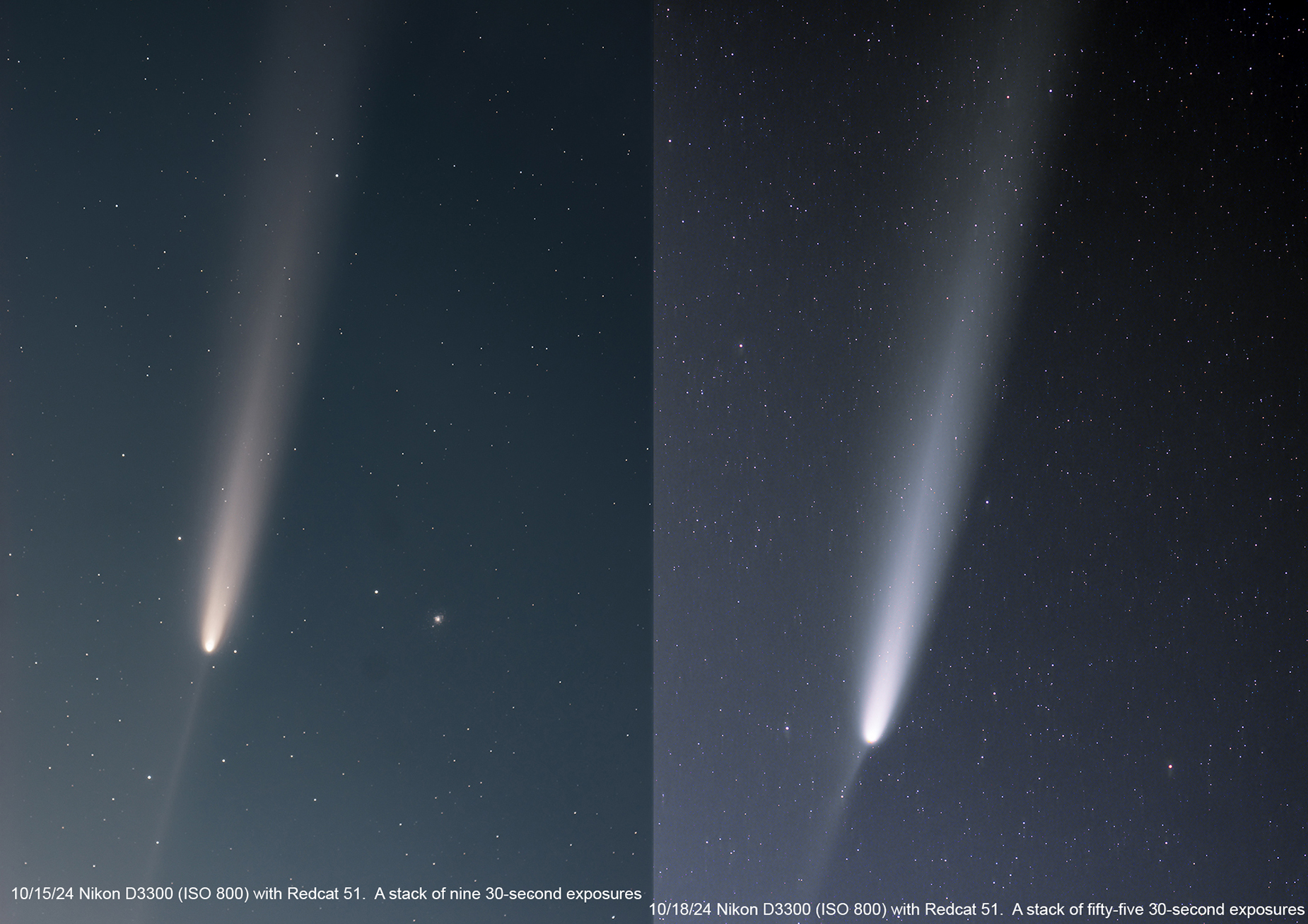
The Comet and its anti-tail on 10/15 and 10/18. Moonlight made imaging difficult.
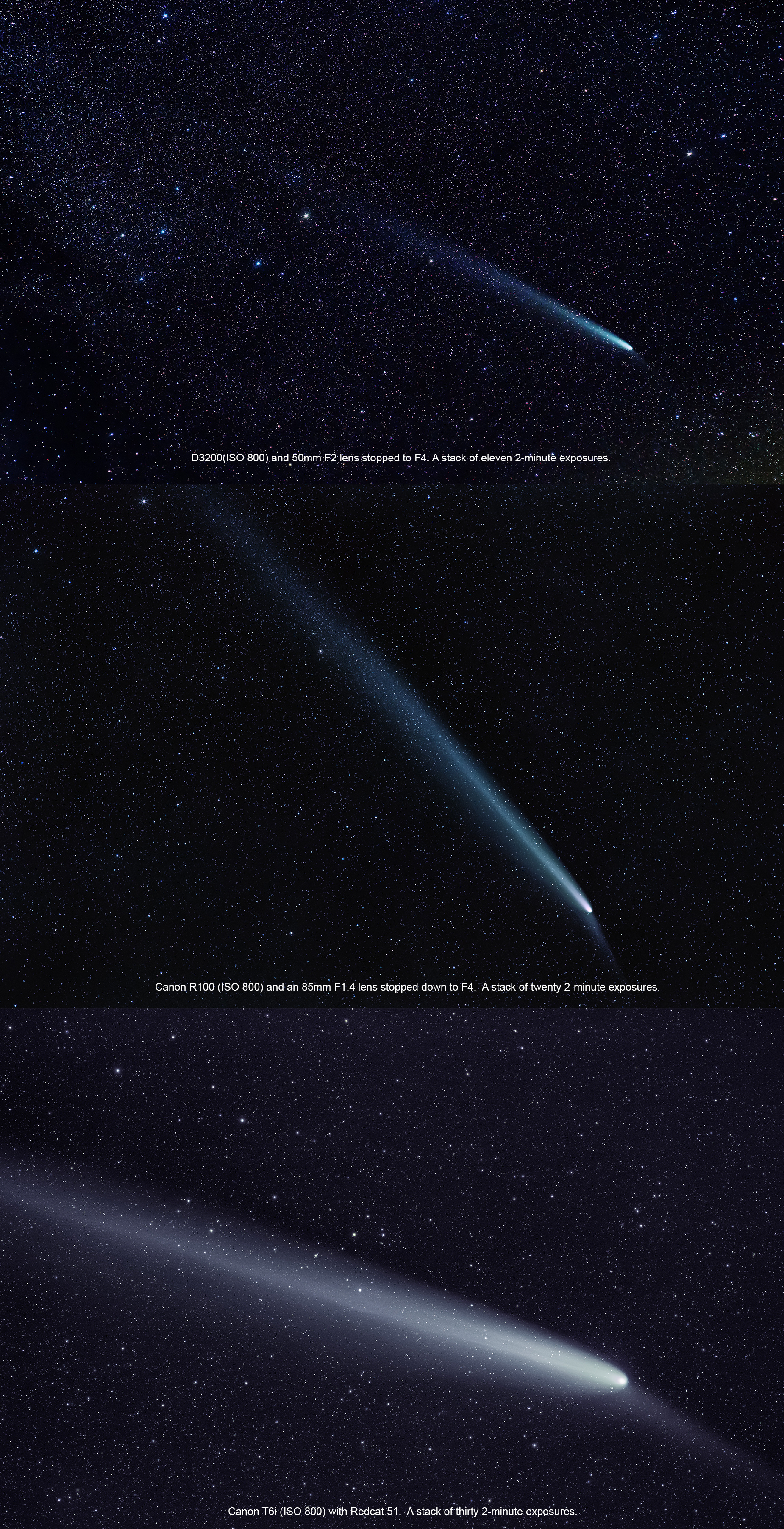
The comet on 10/19. These are the first images where the moon was not interfering and taken under dark sky conditions. The tail is about 15 degrees in length.
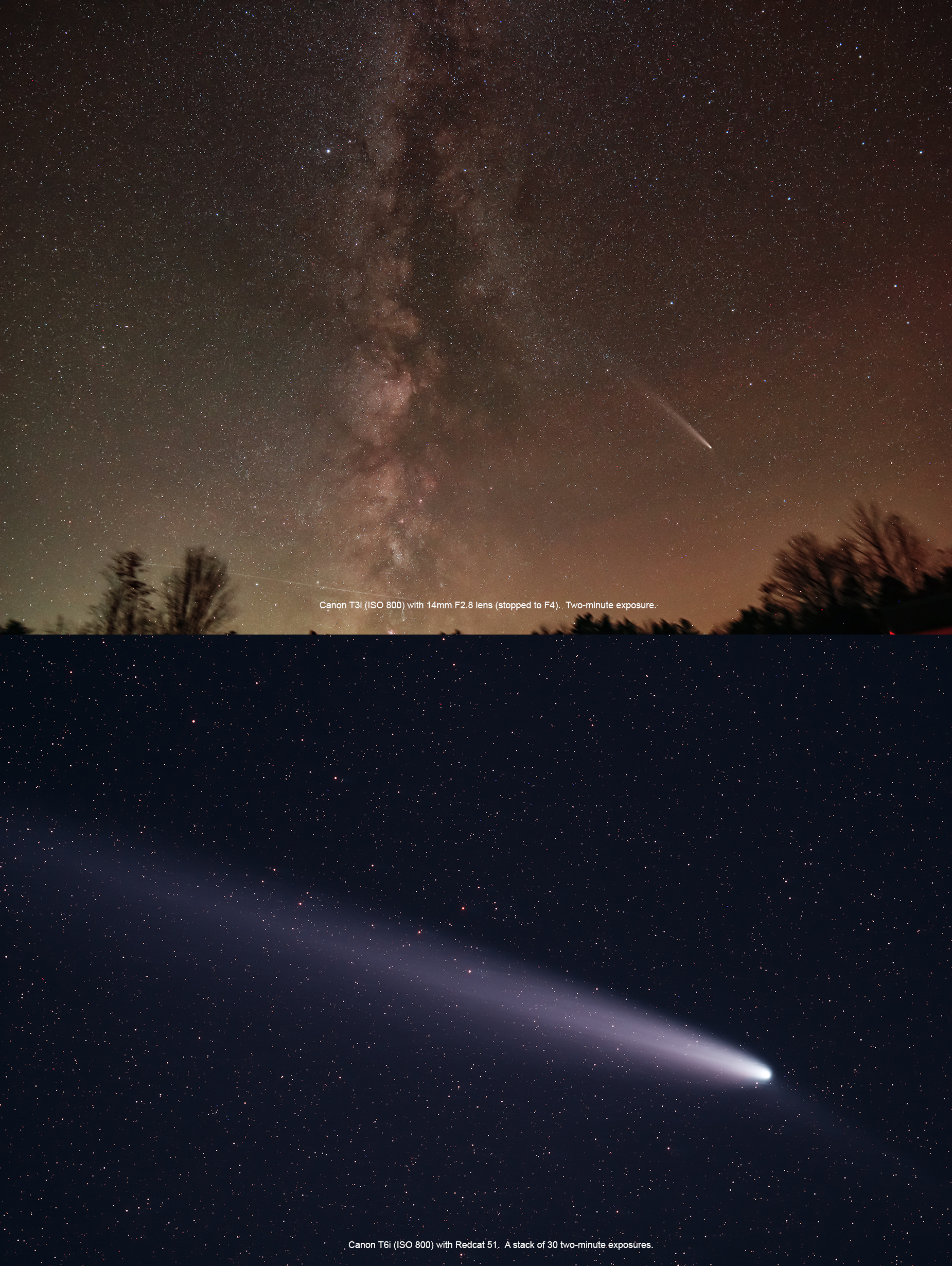
The comet on 10/22/24.
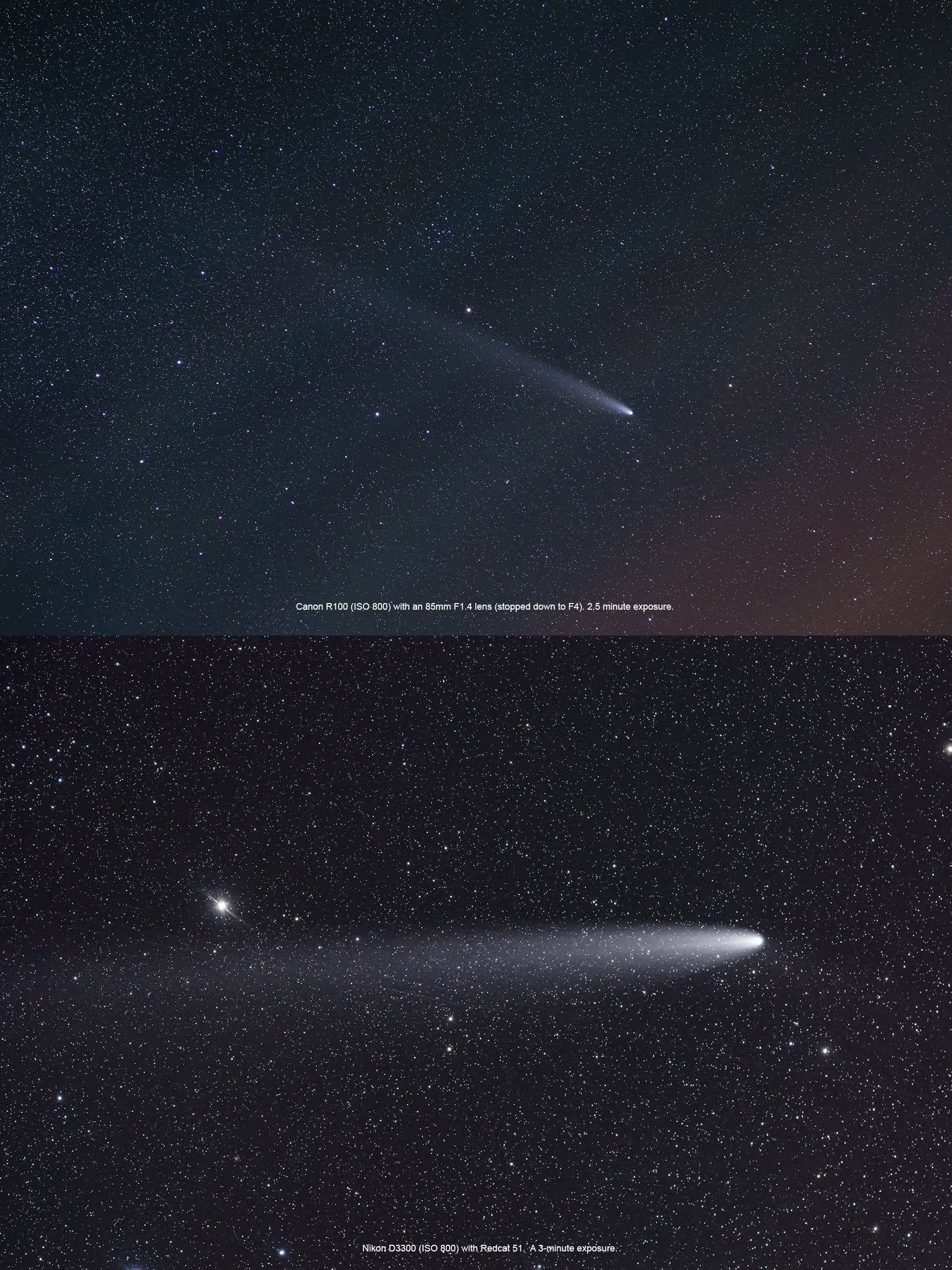
The Comet on 10/26/24.