November 11, 2019: Mercury transit
Mercury transits are not as rare as Venus transits but I had problems seeing them. Either the weather was poor or the transit was not visible from my location. These transits happen at varying intervals. I saw my first transit of Mercury in November of 1973. It was a sunrise/early morning event that I observed by projecting the sun onto a piece of paper with my two-inch telescope. Since then, there had been seven transits of Mercury visible. The next one I was able to observe was in May of 2016, which was visible in the United States. Clouds interefered for part of the event and my photographic results were not very good. Most of this had to do with shutter vibration on my digital SLRs causing motion blur. As a result, the images were not very good. This photograph was taken with a Canon T3i and was probably the best of the bunch.
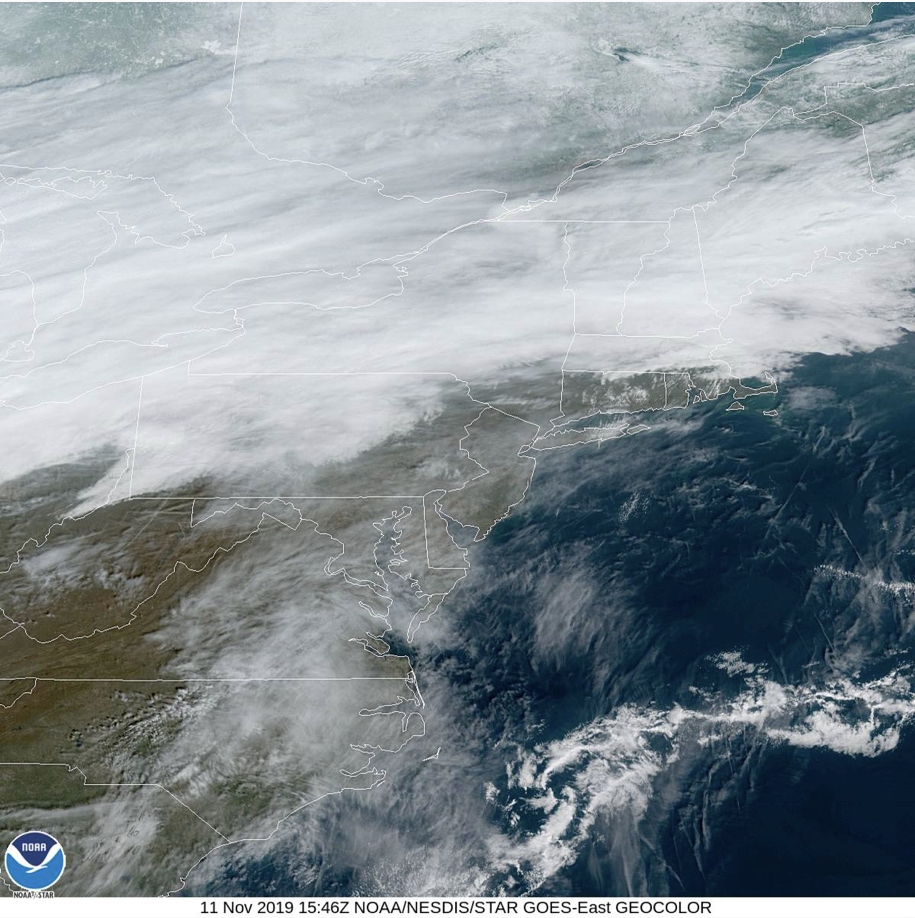
When the 2019 event approached, I wanted to make sure I recorded it properly because the next one would not be until May of 2049. I would be 90 years old so this could be the last one I would see.. When the day approached, the sky was forecast to be cloudy in NH. Fortunately, the weather was going to be clear in southern Connecticutt. So, we packed up our car and drove to my old Navy stomping grounds. There we set up on an overlook of Mystic, Connecticutt to record the transit. This was the satellite photograph for mid-morning on the day of the transit.
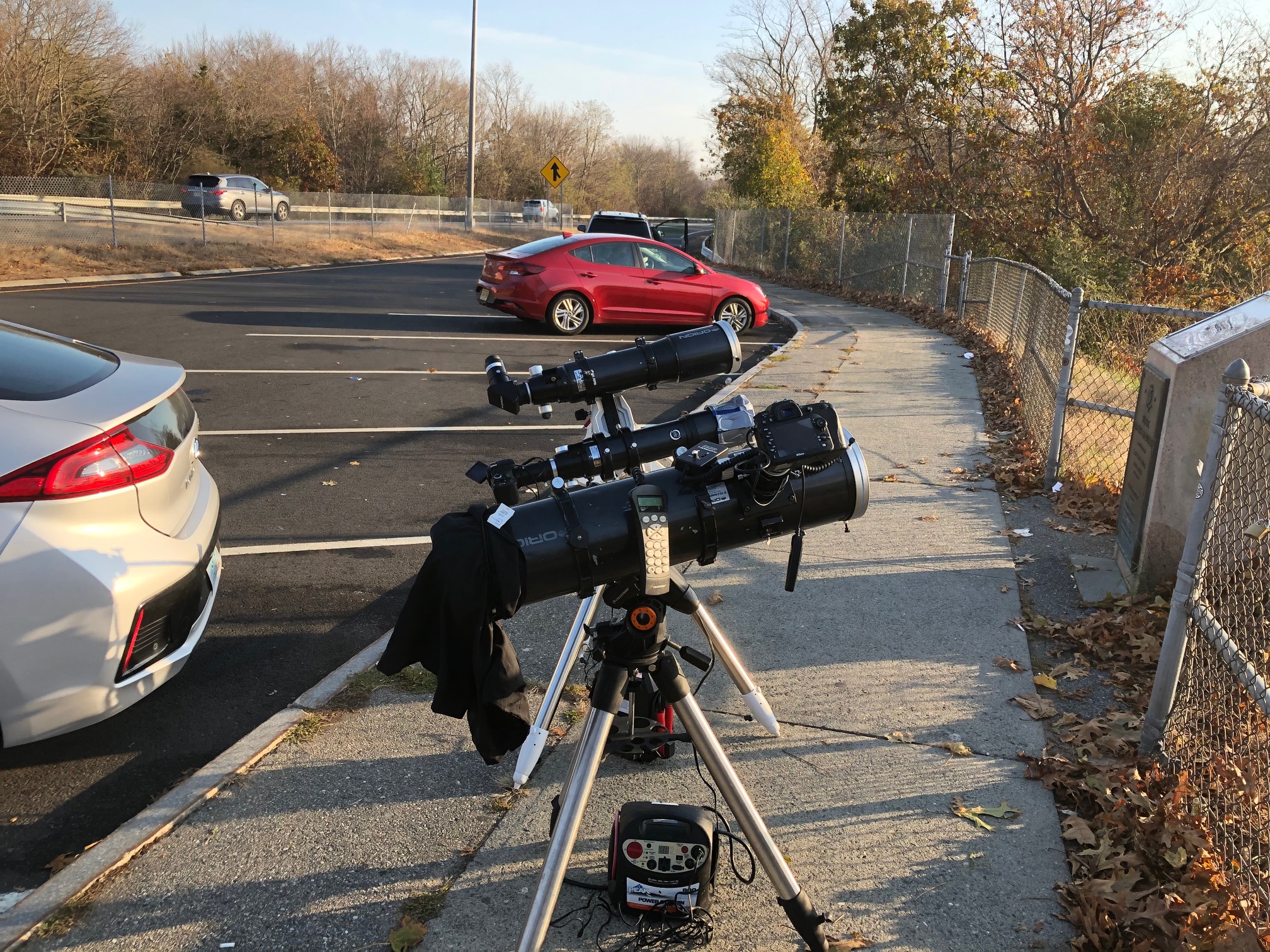
After driving in the early morning we arrived in time to set up our equipment and see first contact. I was going to use my ED80 F7 refractor and 6-inch F5 reflector with a 2X barlow to record the event. I also had my 120mm F5 refractor for visual observation in case any passersby wanted to take a look.
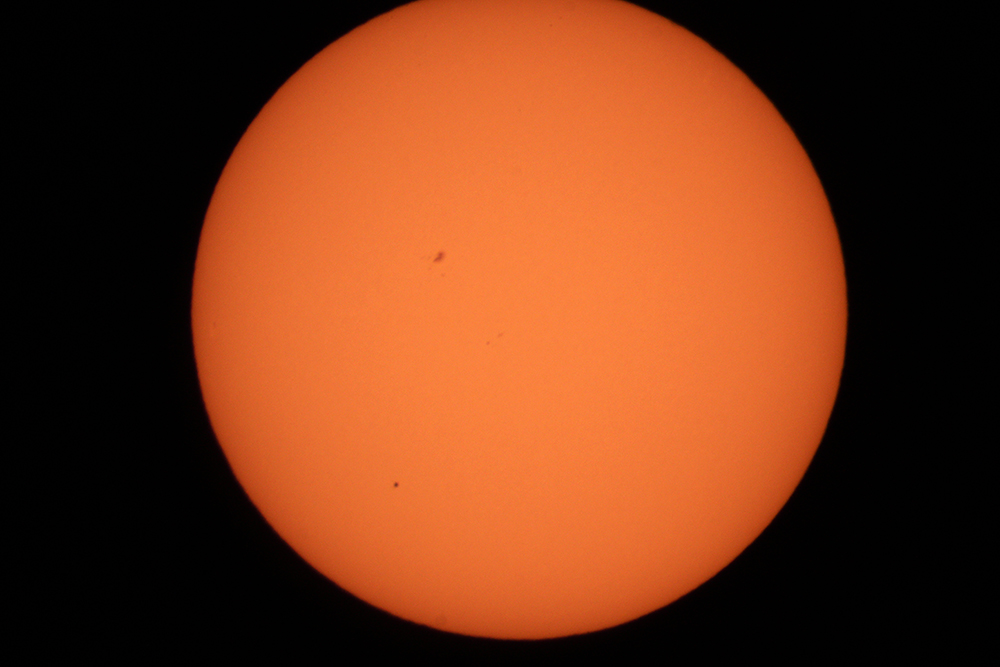
I was unable to record first and second contact because the sun was too low and in a thin cloud bank obscurred the sun. It wasn't until about ten minutes after first contact that I got my first clear shot of the transit with a Nikon D7200 and a 6-inch F5 reflector with a 2X barlow.
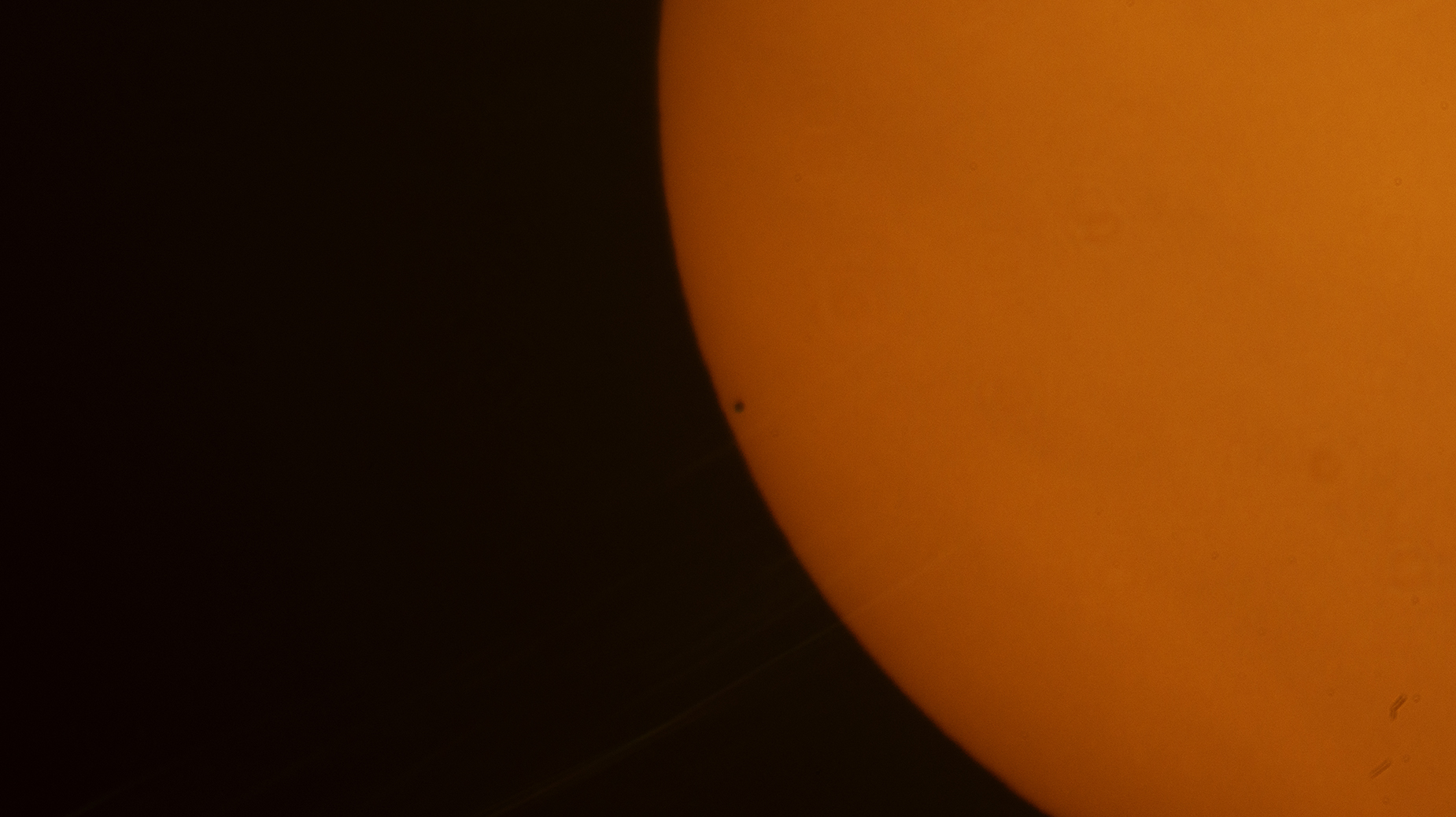
The planet moved across the sun over several hours. Third and fourth contact were caught as clouds began to interfere.
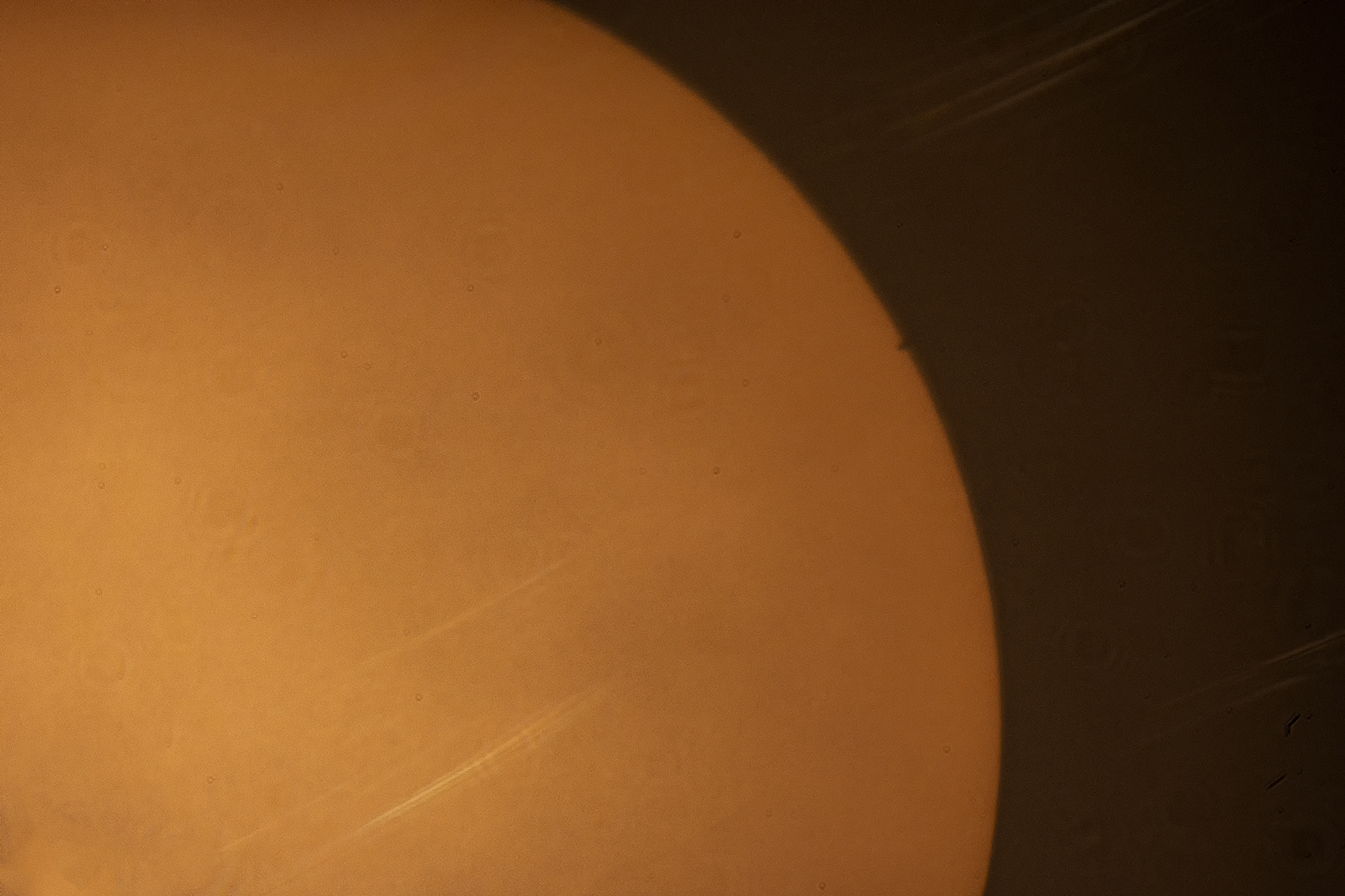
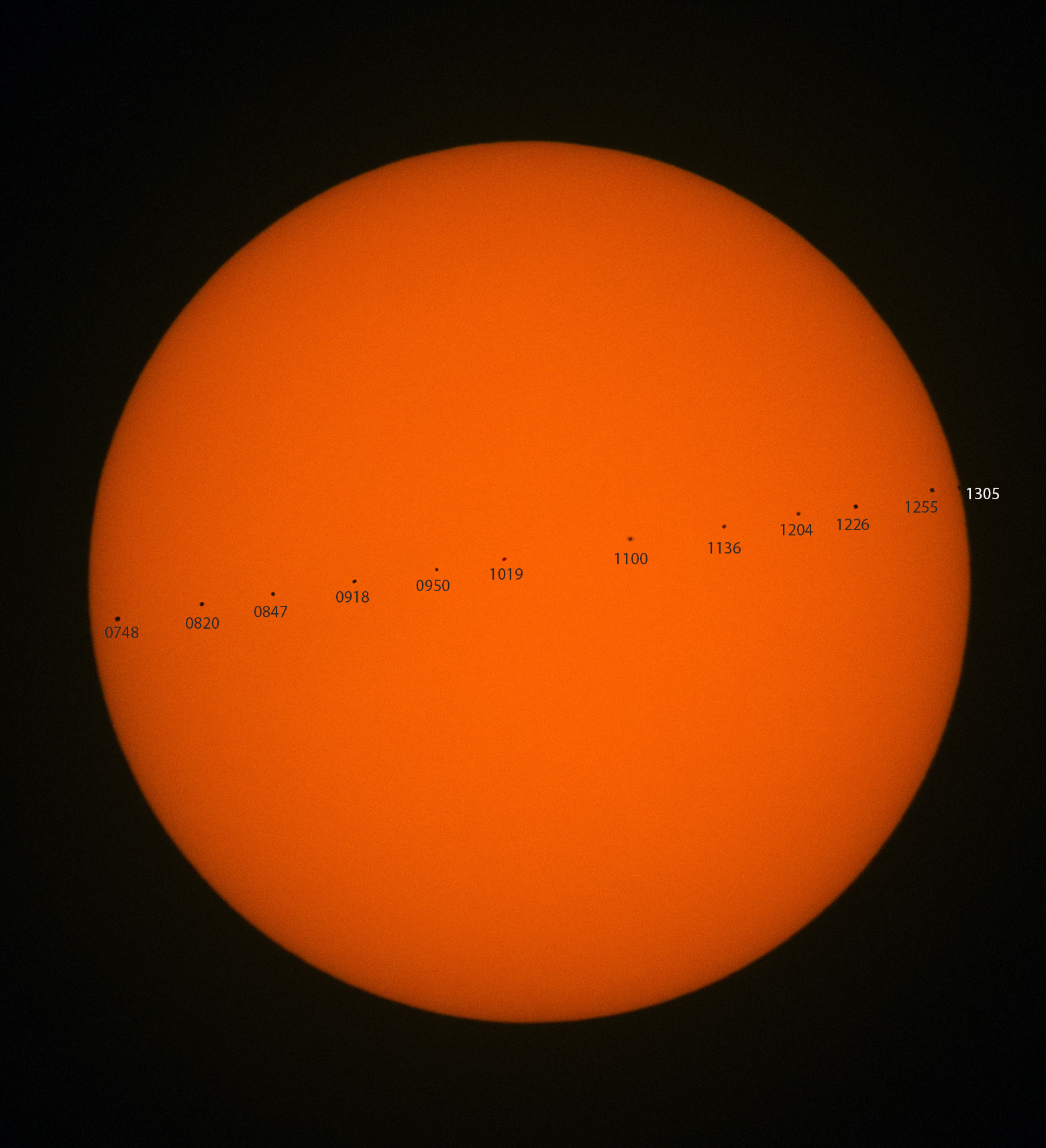
This composite shows the entire transit with times listed in EST. These were taken with the ED80 refractor and Canon T3i camera.