Solar Eclipse - Tennessee August 21, 2017
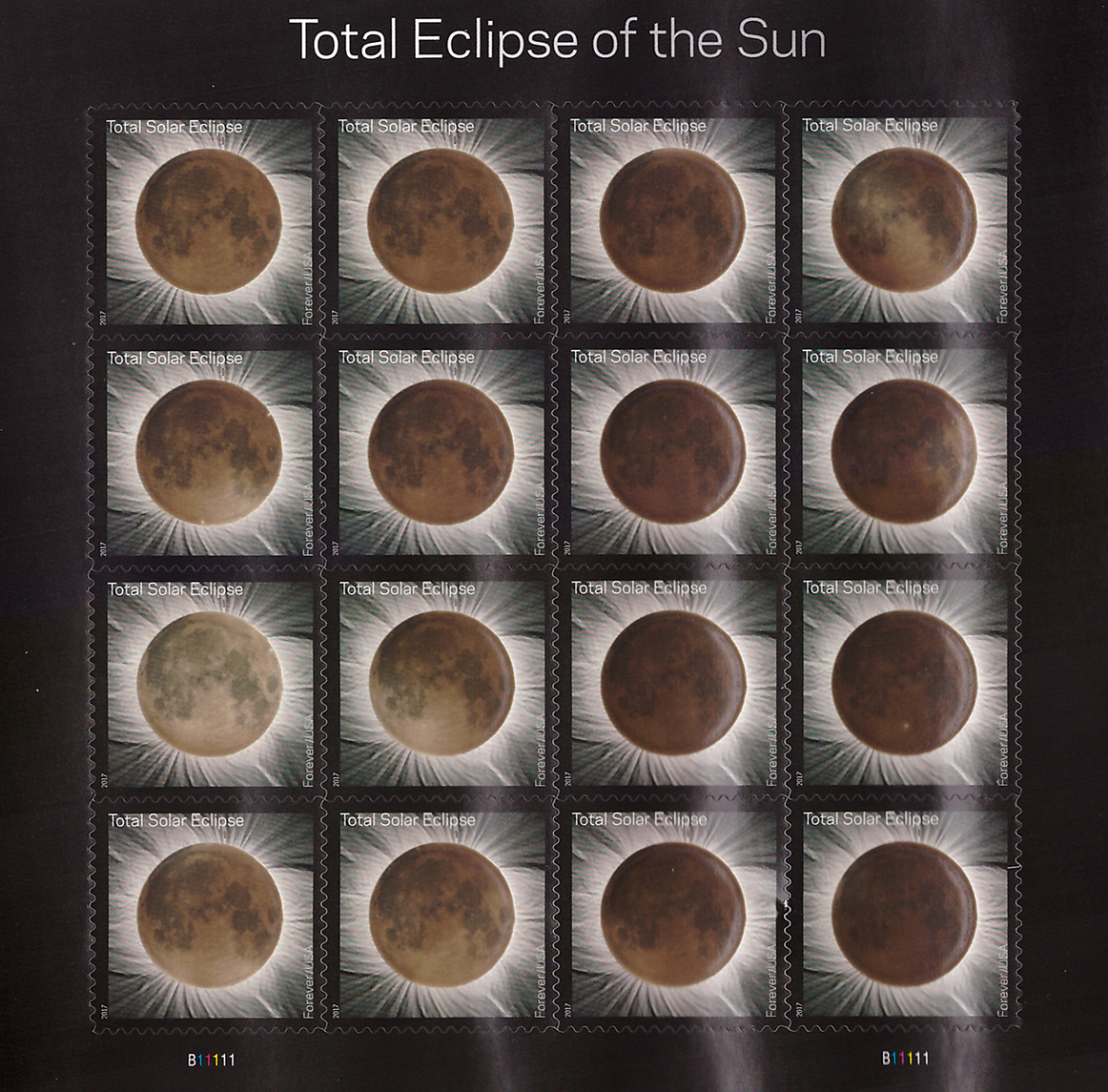
The US forever stamp for the 2017 eclipse
Ever since 1991, I was trying to make my way to see another solar eclipse. Unfortunately, life interfered and I never was able to travel outside the US to see an eclipse. I wanted to put into practice the lessons I leanred from the Mexico eclipse. My opportunity came in 2017 with the first of two continental United States eclipse events in a decade. The 2017 solar eclipse crossed from the Northwestern states and ended over the Atlantic Ocean. The path exited through South Carolina. I orignially wanted to travel to the region of Idaho and Wyoming but I decided to switch those plans and risk Tennessee. My stepson and his family lived in Marysville, near Knoxville. This was not far from centerline. Therefore, we made our plans. I had plans to change our location by 300 miles if the weather did not cooperate. We scouted out several locations a few days before hand and found one site, I thought was ideal. It was a park along the water near Watts Dam, which had facilities available and was almost on centerline. We would have 2 minutes and 39 seconds of totality. The day we scouted out the site, there was a nice breeze and it looked like an ideal site. All we needed was a clear day for the eclipse.

Eclipse day!
The weather predictions for the big day were perfect. There was to be a calm clear day. It was perfect. We left shortly after sunrise and arrived early at the site. The park was already filling up when I began to set up for the event. I had a 6-inch F5 reflector with a Nikon 7200 and a 400mm F5.6 lens/Canon T3i piggybacked to the main scope. I was going to operate the Canon with computer software (Solar Eclipse Maestro). There was also a Pentax KX camera attached to a 120mm F5 refractor, which was to record a video of the eclipse. Finally, I encouraged my wife to operate a Nikon D5000 with a bausch and lomb cassegrain telephoto lens (800 mm FL). I should have been able to record the eclipse with no problem.
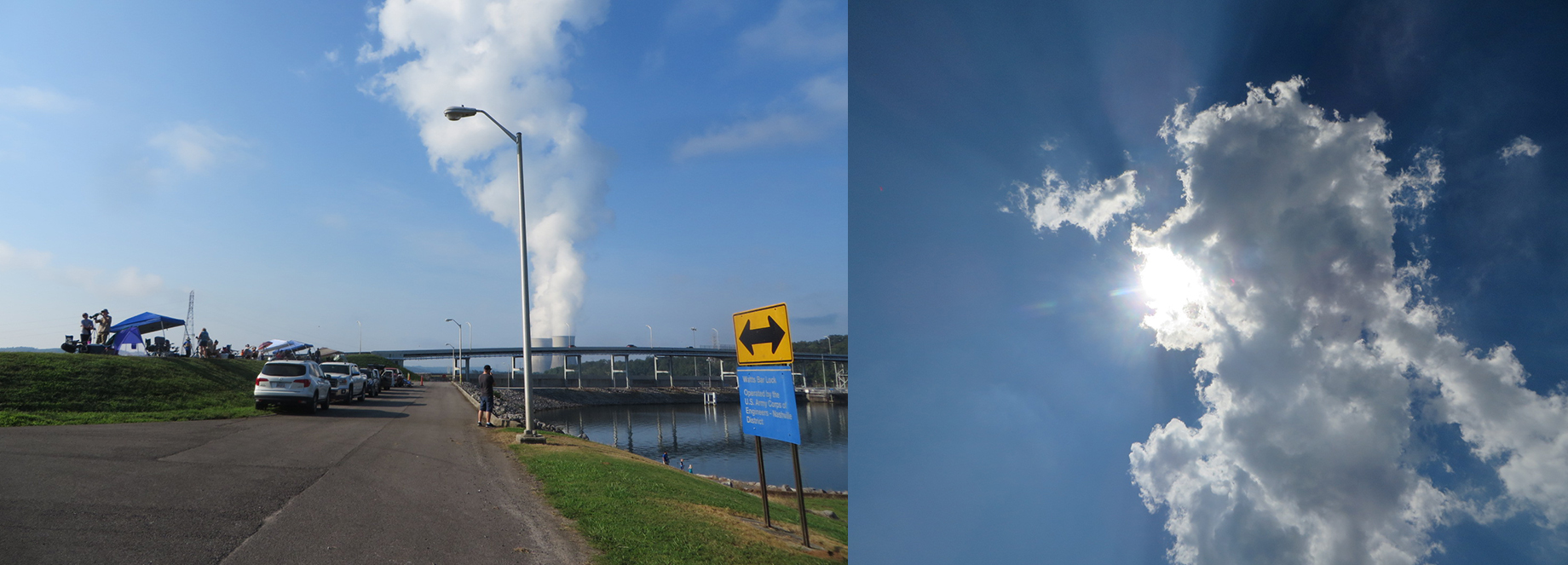
As they say, "The best laid plans of mice and men often go awry". That was what happened here. The main problem had to do with the Watts Bar nuclear power plant that was to the south of the dam. The cooling towers were putting up a large column of steam to the SSW. This was not there when we scouted out the site a few days before. The weather that day had a mild breeze. On this day, there was not a wisp of wind. Early in the morning, it did not seem to be of concern. Many people, who saw my astronomical equipment, considered me an expert and inquired if the steam would be an issue. Looking at the sun and the position of the column, I felt it should not be an issue. However, as the eclipse drew near, I began to think it was going to be close for totality. However, I did not want to move. So, I took my chances and would pay the price for my gamble.
Totality!
We enjoyed waiting for totality and the partial phases went well. As totality approached, the sun's position got very close to the steam column. By the time totality began, the sun was moving in and out of the steam cloud. For a good part of totality, the sun was obscurred by a steam cloud. The beginning of totality was visible but, shortly after second contact, the sun went into the steam cloud. The result was most of my photos were either blurred by the clouds or were not very good. Luckily, the initial photographs were good and the sun came out of the clouds for third contact.
Needless to say, I was disappointed in what happened. I obtained some good results but nothing close to what I expected. I was especially disappointed about not capturing any photographs of prominences or multiple photographs of the corona. Luckily, I could learn from this and be ready for the second great American eclipse just seven years away in 2024.
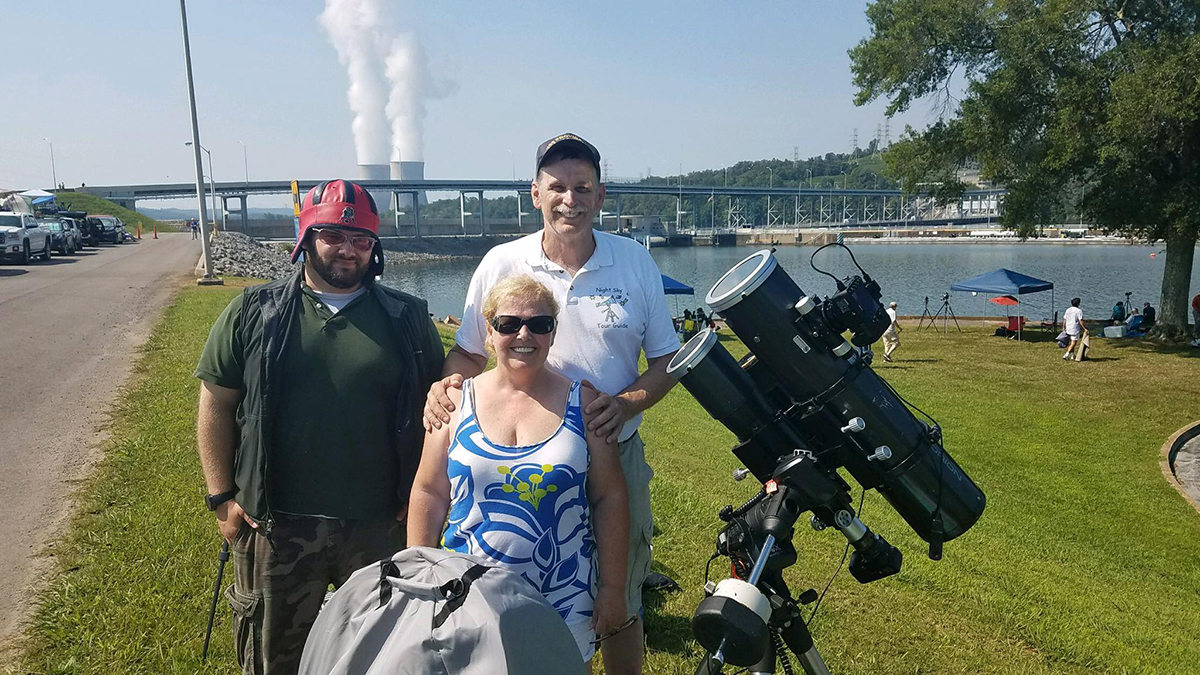
Polly and I with our son Nick. You can see the arrangement I had for the 6-inch and 120mm telescope. The 400mm can also be seen in piggyback mode on the 120mm.
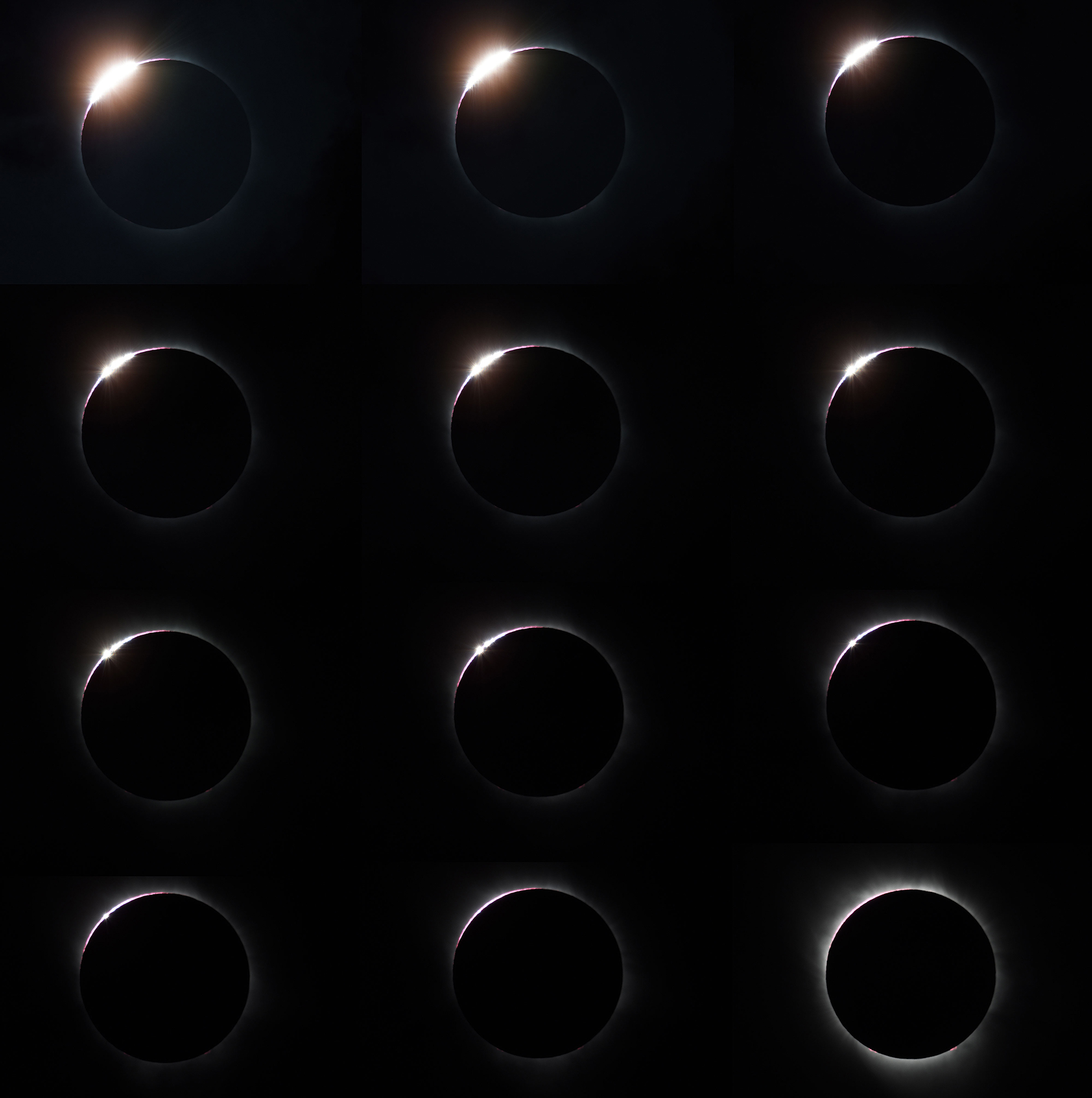
The moments before totality showing baily's beads and the Chromosphere.
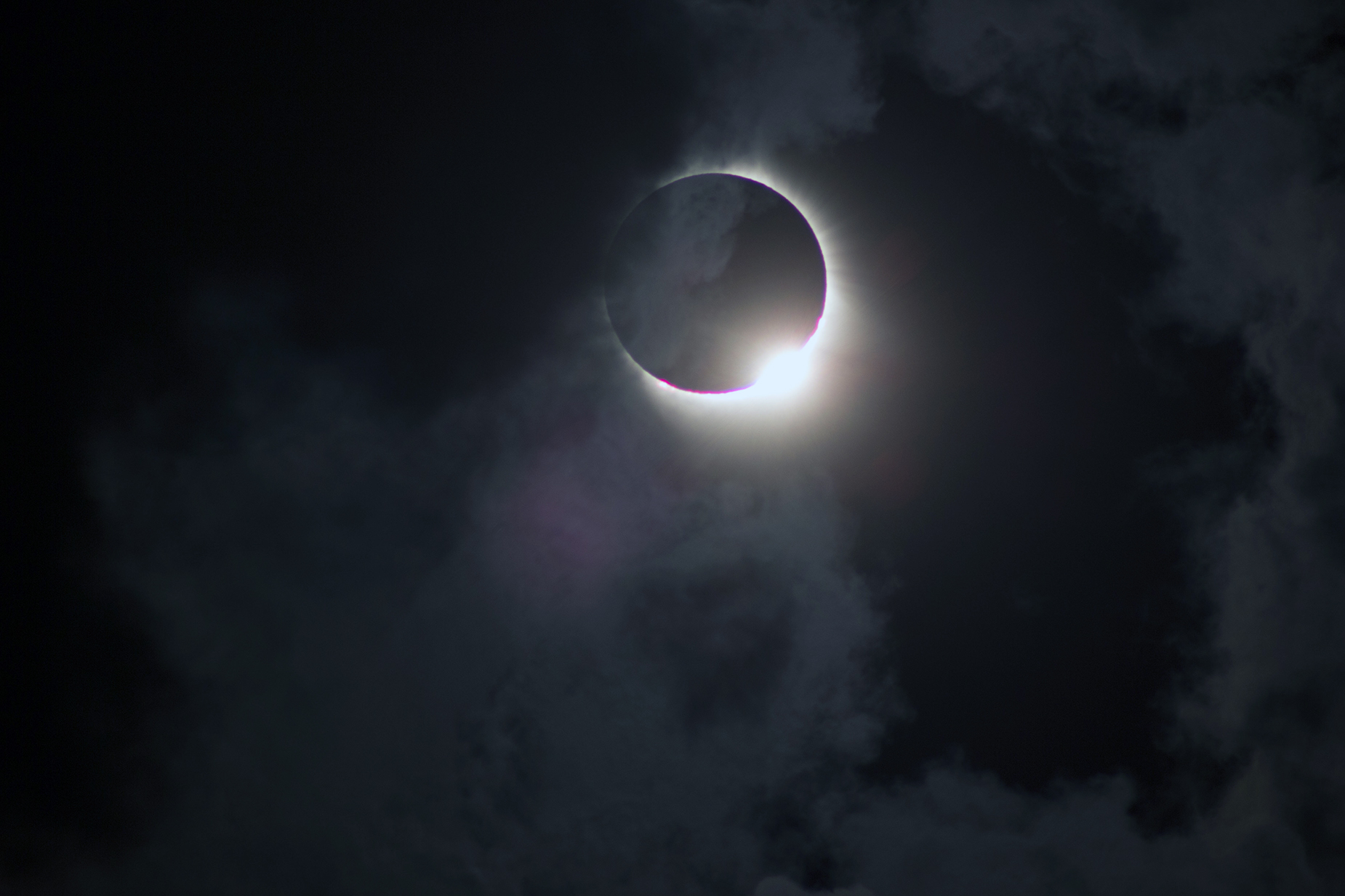
The diamond ring at the end of totality just as the sun exited the steam cloud. This was taken with a 400mm and Canon T3i. Exposure time was 1/160 second at F5.6 and ISO 200.
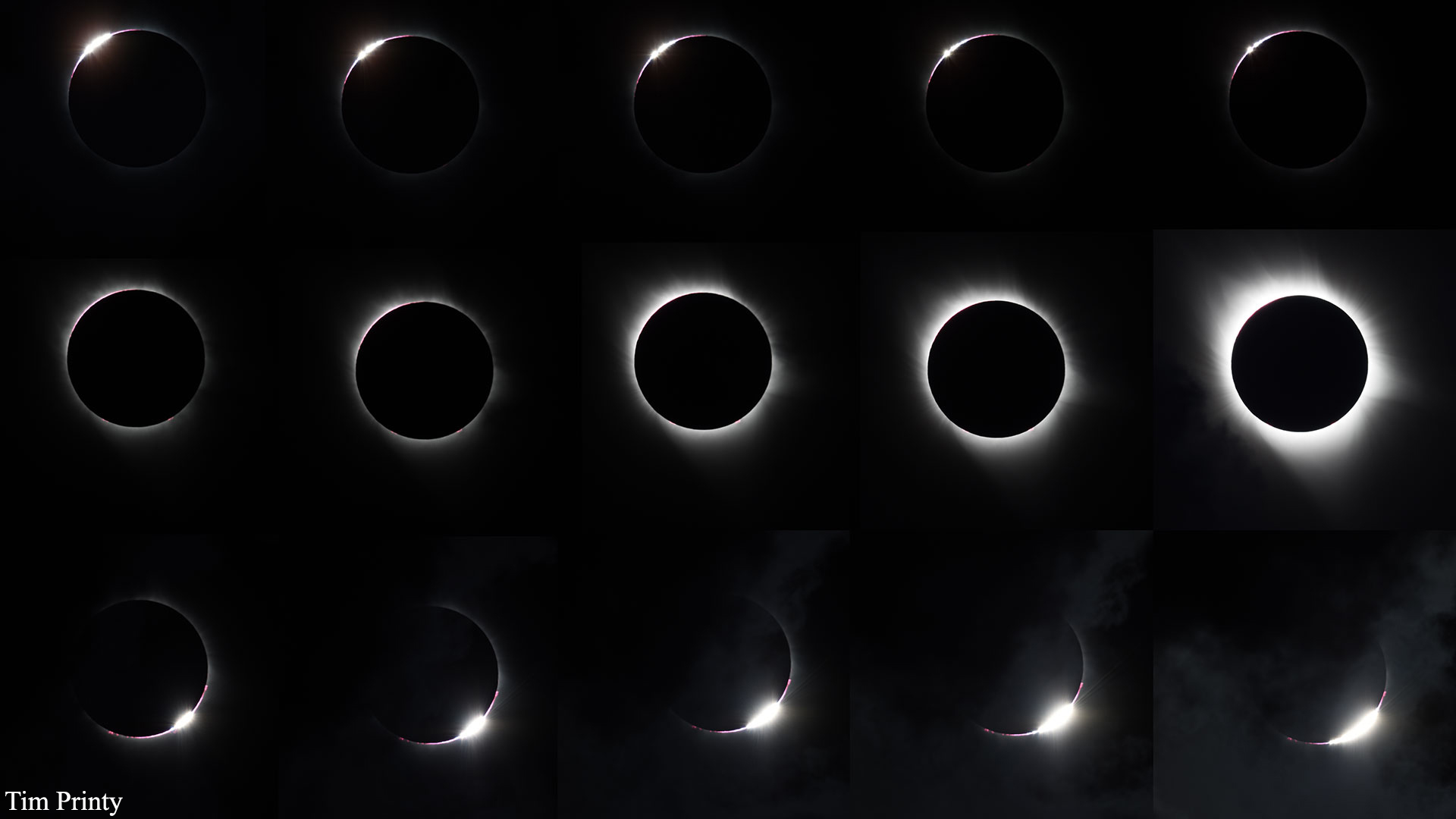
The best photographs of the eclipse taken with the Nikon D7200 and 6-inch F5 reflector.
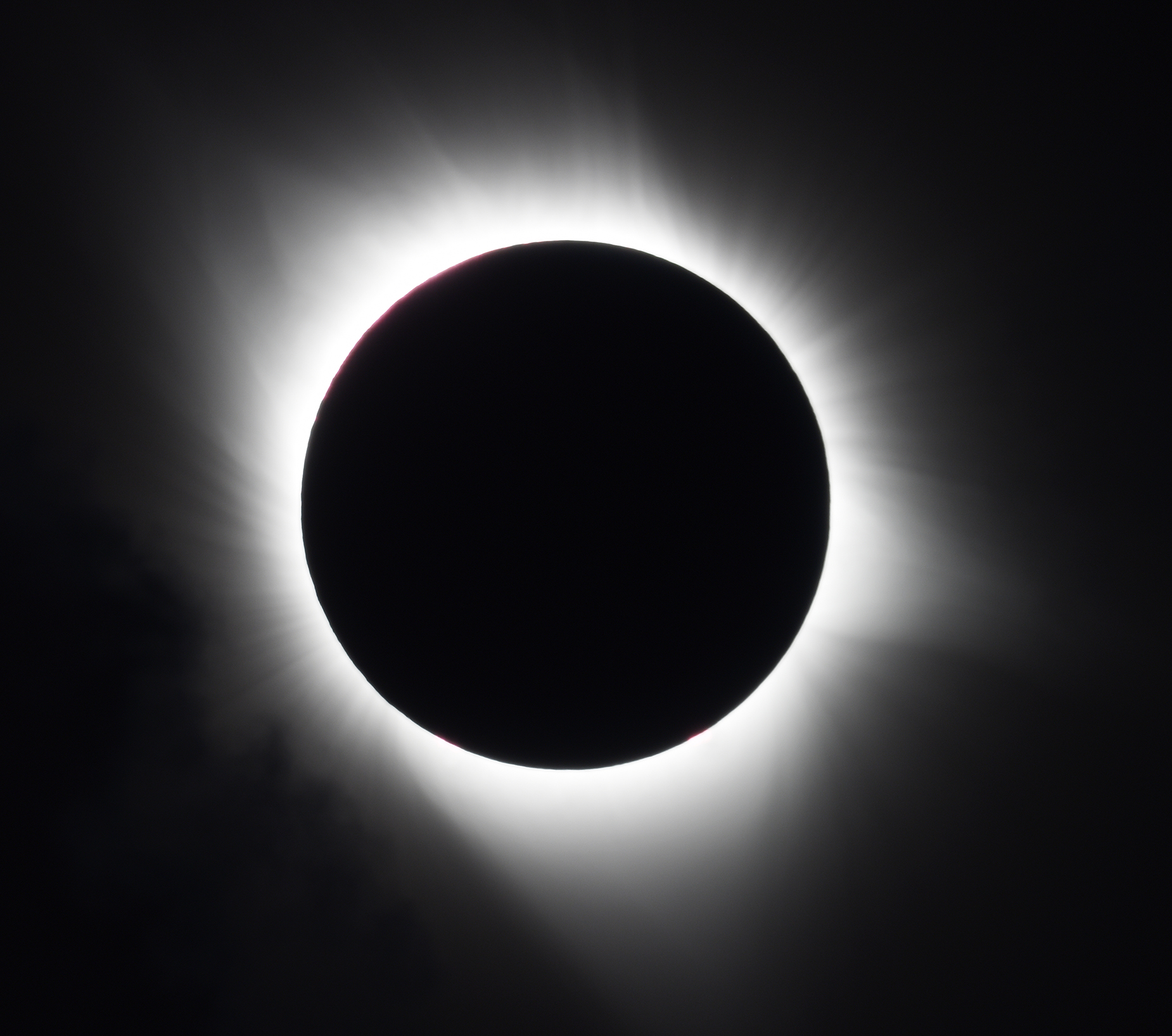
This image of the corona was taken just before the steam cloud covered the sun. Exposure time was 1/80 of second with the 6-inch F5 at ISO 100
Lessons learned